


Ransomware continues to rank among the most expensive cyber threats facing organizations. It disrupts hospital operations, halts manufacturing lines, interrupts government services, and forces businesses to spend millions on recovery instead of growth. As attackers adopt new techniques and ransomware-as-a-service expands, organizations across the US and worldwide face greater operational and financial risks. Explore the latest ransomware statistics to understand how the threat landscape is evolving and what the numbers reveal about current cybercrime trends.
Editor’s Choice
- Global ransomware attacks increased by 50% year over year in 2025, reaching 7,874 recorded incidents, making it the highest annual total on record.
- Cybercriminals received approximately $820 million in on-chain ransomware payments during 2025, although payment volume declined compared to 2024 as more victims refused to pay.
- The median ransomware payment increased by 368% in 2025 to nearly $60,000, showing attackers continued to demand higher payments despite fewer successful payouts.
- North America accounted for 56% of all ransomware victims reported globally during 2025, maintaining its position as the most targeted region.
- Industrials represented 28% of ransomware victims worldwide in 2025, making manufacturing and industrial operations the most targeted sector.
- During Q2 2026, ransomware activity increased 3% over the previous quarter, confirming that attack levels remain elevated in 2026.
- Threat intelligence tracked 665 ransomware attacks in June 2026 alone, highlighting that high attack volumes continue throughout the year.
Recent Developments
- Threat intelligence recorded 749 ransomware incidents in May 2026, demonstrating that monthly attack volumes remain consistently high.
- April 2026 recorded 748 ransomware attacks, only 7% lower than March, indicating sustained activity despite monthly fluctuations.
- January 2026 saw 741 reported ransomware attacks, closely matching January 2025 despite a month-over-month decline from December.
- During Q2 2026, North America represented 44% of all reported ransomware attacks, while Europe accounted for 26%.
- The ransomware group Qilin remained the most active threat actor throughout early 2026, accounting for 12% to 17% of observed attacks depending on the reporting period.
- Security researchers observed ransomware groups increasingly collaborating with state-linked cyber actors, making attribution more difficult and expanding operational capabilities.
- Supply chain compromises continued to increase during 2026, allowing attackers to affect multiple organizations through a single software or service provider.
- Threat intelligence also reported ransomware operators increasingly exploiting messaging platforms such as WhatsApp, Signal, and Telegram for social engineering and initial access.
- Law enforcement and international sanctions increasingly targeted ransomware infrastructure instead of only arresting individual operators, raising operating costs for cybercriminals.
Global Ransomware Attack Statistics
- Organizations worldwide experienced 7,874 ransomware attacks in 2025, a 50% increase from the previous year.
- During June 2026, analysts documented 665 global ransomware incidents, averaging more than 22 attacks every day.
- Threat intelligence recorded 2,229 ransomware attacks during Q2 2026, up 3% from Q1.
- February and December ranked among the busiest ransomware months during 2025, contributing significantly to the year’s record activity.
- North America remained the primary target, accounting for 980 attacks during Q2 2026.
- Europe experienced 579 ransomware attacks during Q2 2026, representing 26% of global incidents.
- Intelligence reports indicate ransomware campaigns increasingly target global supply chains, allowing one compromise to affect many downstream organizations.
- Researchers observed that Initial Access Broker (IAB) activity often rises roughly 30 days before increases in ransomware payments and victim disclosures, making it an important early warning signal.
- Even though attacks reached record highs, total ransomware payments declined, suggesting more organizations chose recovery instead of paying attackers.
Ransomware Attacks Data (2025-2026)
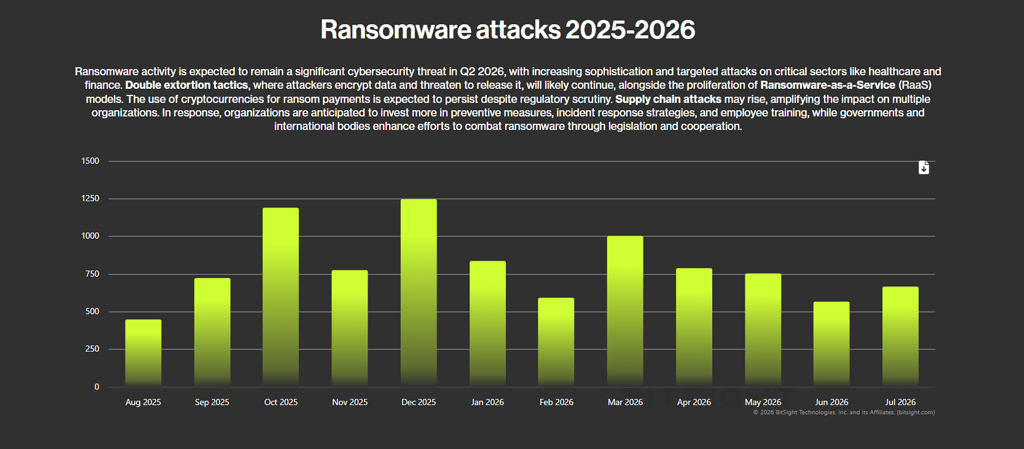
- December 2025 recorded the highest number of ransomware attacks, reaching 1,249 incidents during the 12-month period.
- October 2025 experienced the second-highest attack volume with 1,192 incidents, highlighting a significant surge in late 2025.
- March 2026 marked the strongest month of 2026, reporting 1,003 ransomware attacks, making it the only month in 2026 to exceed 1,000 incidents.
- August 2025 had the lowest number of attacks, with 448 incidents, serving as the baseline for the period.
- Ransomware attacks increased from 448 in August 2025 to 1,249 in December 2025, representing an increase of approximately 179% over four months.
- Following the December peak, attacks dropped to 839 in January 2026, a decline of about 33% compared to the previous month.
- February 2026 saw ransomware incidents fall further to 593 attacks, one of the lowest monthly totals in the dataset.
- Attack activity rebounded sharply in March 2026, climbing to 1,003 incidents, an increase of approximately 69% from February.
- During the second quarter of 2026, ransomware attacks gradually declined from 789 in April to 754 in May and 567 in June, indicating a temporary easing in activity.
- July 2026 recorded 669 attacks, reflecting an 18% increase compared to June 2026, suggesting renewed ransomware activity.
- Across the entire dataset, four months–October 2025, December 2025, January 2026, and March 2026, recorded more than 800 ransomware attacks.
- The data shows ransomware activity was most intense during late 2025, while 2026 exhibited greater month-to-month fluctuations, with alternating periods of decline and resurgence.
Percentage of Organizations Affected by Ransomware
- Ransomware was present in 44% of all confirmed data breaches in 2025, a 37% annual increase.
- A staggering 88% of breaches at small and medium businesses involved ransomware.
- Global ransomware attacks saw a 58% increase in 2025, with 55% targeting US organizations.
- Manufacturing is the most targeted sector, accounting for 14% of all global ransomware attacks.
- The average total cost of a ransomware incident reached a record $5.08 million.
- Exploited vulnerabilities served as the entry point for 32% of all ransomware attacks.
- Double extortion tactics are now utilized in 87% of ransomware cases to exfiltrate data before encryption.
- Approximately 85% of all ransomware attacks currently go unreported to law enforcement.
- Healthcare remained the most expensive sector for breaches, averaging $7.42 million per incident.
Ransomware Statistics by Industry
- Industrial organizations accounted for 28% of ransomware victims during 2025, making them the most frequently targeted industry.
- During Q2 2026, industrial organizations represented 30% of all ransomware attacks.
- In May 2026, industrial businesses accounted for 29% of ransomware incidents.
- April 2026 data showed industrial organizations represented 28% of all reported ransomware victims.
- January 2026 reports found 32% of ransomware attacks targeted industrial organizations, the highest sector share that month.
- December 2025 also saw industrial organizations account for 29% of ransomware attacks, demonstrating consistent targeting across reporting periods.
- Researchers attribute the industry’s high exposure to operational technology, supply chain dependencies, and pressure to restore production quickly.
- Beyond industrial firms, healthcare, government, education, financial services, and professional services remain among the most frequently targeted sectors because operational disruption increases the likelihood of extortion success.
Top Ransomware Victims by Sector
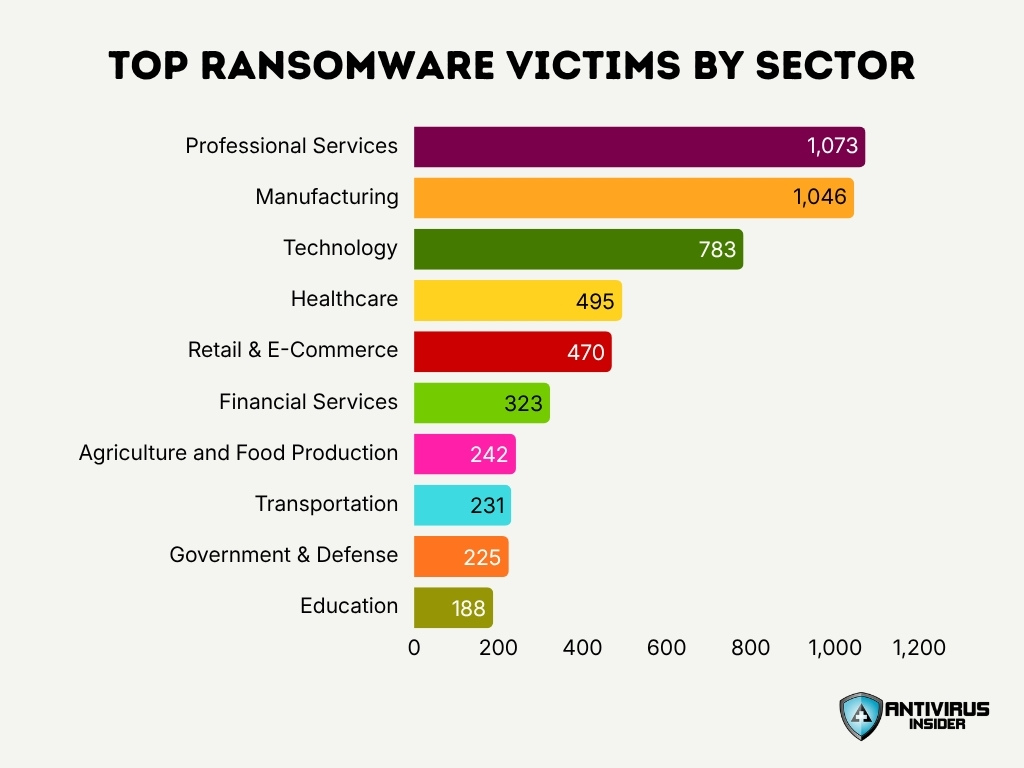
- Professional Services recorded the highest number of ransomware victims, with 1,073 incidents, making it the most frequently targeted sector.
- Manufacturing ranked second, reporting 1,046 ransomware victims, only 27 fewer than Professional Services.
- The Technology sector experienced 783 ransomware victims, highlighting its continued attractiveness to cybercriminals.
- Healthcare reported 495 ransomware victims, emphasizing the ongoing risks to hospitals, clinics, and healthcare providers.
- Retail & E-Commerce followed closely with 470 ransomware victims, reflecting the sector’s exposure due to valuable customer and payment data.
- Financial Services recorded 323 ransomware victims, demonstrating that banks and financial institutions remain high-value targets despite strong security investments.
- Agriculture and Food Production experienced 242 ransomware victims, showing that critical supply chain industries are increasingly under attack.
- Transportation reported 231 ransomware victims, illustrating the growing cybersecurity risks facing logistics and transportation networks.
- Government & Defense accounted for 225 ransomware victims, indicating that public-sector organizations continue to face persistent cyber threats.
- Education recorded the fewest ransomware victims among the listed sectors, with 188 incidents, though schools and universities remain frequent ransomware targets.
- The top three sectors, Professional Services, Manufacturing, and Technology, collectively accounted for 2,902 victims, representing the majority of incidents among the sectors shown.
- The data highlights that ransomware attacks affect a broad range of industries, from private enterprises to public institutions and critical infrastructure, underscoring the widespread nature of the threat.
Healthcare Ransomware Statistics
- A 2025 study of 292 health care organizations that experienced ransomware found that only 36% paid a ransom, down from 61% in 2022. The decline indicates that more providers now rely on alternatives to attacker-supplied decryption tools.
- Just 51% of health care organizations with encrypted data used backups for recovery in 2025, down from 72% in earlier survey data. The drop shows that backup availability does not always translate into usable recovery infrastructure.
- The median ransom demand reported by health care victims fell 91% year over year, from $4 million in 2024 to $343,000 in 2025.
- The median amount health care organizations actually paid dropped from $1.47 million in 2024 to $150,000 in 2025, the lowest median payment among the industries covered by the study.
- Average ransomware recovery costs in health care, excluding the ransom itself, fell 60%, from $2.57 million in 2024 to $1.02 million in 2025. Recovery still represents a seven-figure financial event for a typical affected provider.
- Four US ransomware-related health care investigations settled in April 2026 involved breaches affecting more than 427,000 people, illustrating how one ransomware incident can expose data belonging to large patient populations.
- By April 2026, federal regulators had completed 19 ransomware breach investigations under health data protection rules, alongside 13 investigations conducted through a separate risk-analysis initiative.
- Health care’s relatively low ransom payments do not eliminate its operational exposure. Across all sectors, 48% of breaches in the 2026 breach dataset involved ransomware, keeping hospitals and other essential-service organizations exposed to a threat that can disrupt time-sensitive care.
Manufacturing Ransomware Statistics
- Researchers identified 633 manufacturing ransomware victims in Q1 2026, making manufacturing the largest component of the 1,020 industrial ransomware incidents recorded worldwide during the quarter.
- Construction-related manufacturing and industrial businesses accounted for 152 incidents in Q1 2026, followed by equipment companies with 116 and food and beverage organizations with 57.
- Manufacturing represented more than two-thirds of industrial ransomware victims in 2025, while more than 3,300 industrial organizations were affected across the year.
- Researchers tracked 119 ransomware groups targeting industrial organizations in 2025, roughly 49% more than in 2024, illustrating how rapidly the attacker ecosystem expanded.
- Among 332 manufacturers hit by ransomware in a 2025 industry study, only 40% had data encrypted, down sharply from 74% in the previous year’s study.
- At the same time, 50% of manufacturers stopped ransomware before encryption in 2025, more than double the 24% recorded one year earlier. However, extortion-only attacks increased from 3% to 10%.
- Among manufacturers whose data was encrypted, 39% also experienced data theft, demonstrating why preventing encryption alone no longer eliminates extortion risk.
- 51% of manufacturers with encrypted data paid the ransom in 2025. The median payment reached $1 million, compared with a median initial demand of $1.2 million.
- Average manufacturing recovery costs, excluding ransoms, decreased 24% to $1.3 million, while 58% of affected manufacturers fully recovered within one week, up from 44% a year earlier.
Government, Education, and Critical Infrastructure Ransomware Statistics
- Public administration recorded 3,634 incidents in the 2026 breach dataset, with 2,410 confirmed data breaches. Ransomware remained a major component of the sector’s system-intrusion activity.
- External attackers accounted for 56% of public administration breaches, while internal actors represented 44%. Financial motives appeared in 69% of cases and espionage in 33%.
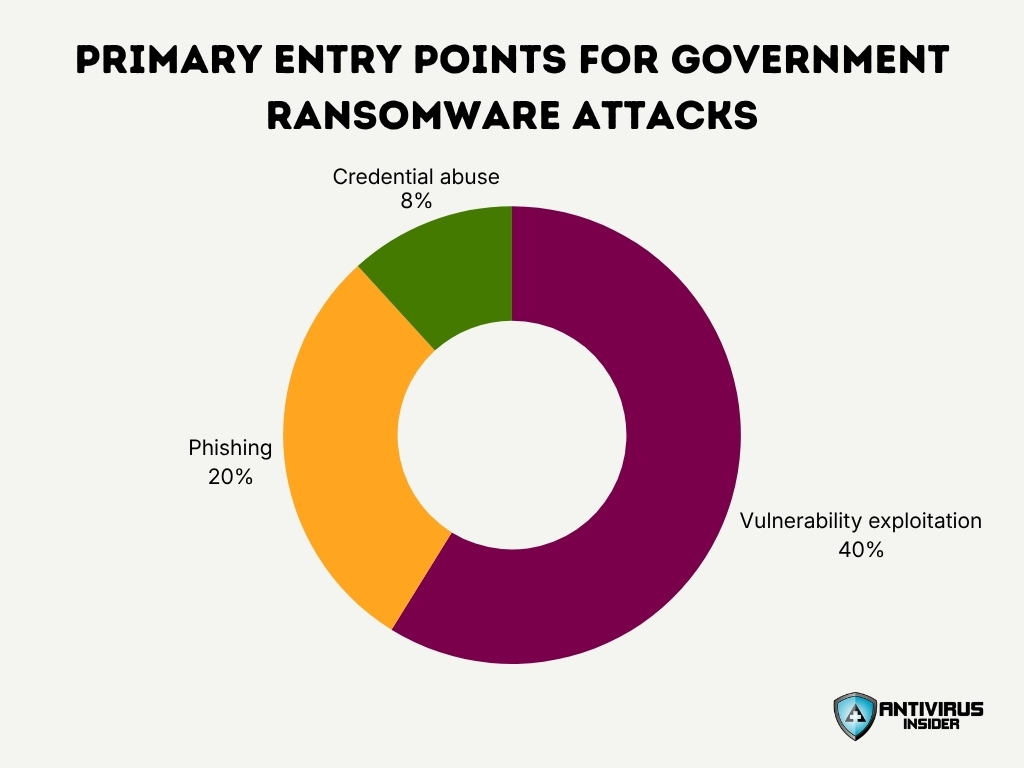
- Vulnerability exploitation represented 40% of known initial access in government breaches, compared with 20% for phishing and 8% for credential abuse.
- Within government breaches involving hacking, vulnerability exploitation appeared in 82%, while stolen credentials appeared in 59% and defense-evasion techniques in 64%.
- Education experienced 1,302 incidents and 1,252 confirmed breaches in the 2026 dataset. System intrusion alone accounted for 52% of education breaches.
- In education, vulnerability exploitation accounted for 34% of initial access, phishing for 22%, and credential abuse for 8%. The human element contributed to 68% of breaches.
- A 2025 ransomware study found encryption in only 29% of lower-education attacks, compared with 58% in higher education. Lower education stopped 67% of attacks before encryption, up from 14% in the previous study.
- Median ransom payments in lower education fell from $6.6 million to $800,000 in 2025, while higher education’s median payment dropped from $4.41 million to $463,000.
- Critical infrastructure remained a significant ransomware target in Q1 2026. Researchers recorded 39 oil and natural gas victims, 15 electric utilities, six water utilities, and 87 transportation organizations.
- Government entities added 42 ransomware incidents to the industrial and operational-technology dataset in Q1 2026, while organizations directly supporting industrial control environments accounted for another 139 incidents.
Financial Services Ransomware Statistics
- The 2026 breach dataset recorded 3,809 security incidents involving financial and insurance organizations, including 1,300 incidents with confirmed data disclosure.
- System intrusion, social engineering, and other major attack patterns accounted for 81% of financial-sector breaches, with ransomware continuing to drive a substantial share of complex intrusion activity.
- External threat actors caused 88% of financial-sector breaches in the 2026 dataset, while internal actors accounted for 12%.
- Financial gain motivated 98% of financial and insurance breaches, confirming why banks, insurers, lenders, payment companies and investment firms remain attractive ransomware targets.
- Exploited vulnerabilities provided initial access in 22% of financial-sector breaches, while phishing accounted for 20% and credential abuse for 15%.
- The human element appeared in 65% of financial-sector breaches, meaning employee actions, social engineering or credential-related behavior continued to play a major role in successful attacks.
- Third parties contributed to 34% of financial-sector breaches, making suppliers, service providers and interconnected technology platforms an important extension of ransomware risk.
- A 2025 ransomware analysis found that 49% of financial services victims had data encrypted. When attackers also compromised backups, recovery costs reached about $3 million versus roughly $375,000 when backups remained intact.
- A dedicated 2025 financial services ransomware study drew on the experiences of 369 IT and cybersecurity leaders whose organizations had encountered ransomware, providing a substantial sector-specific view of current attack and recovery conditions.
Small and Medium-Sized Business Ransomware Statistics
- The 2026 breach dataset examined 7,256 incidents involving SMBs, including 7,152 with confirmed data disclosure, showing that smaller organizations account for a substantial portion of documented cybercrime.
- External attackers caused 100% of the classified SMB breaches in this dataset, and the recorded attacker motive was financial in 100% of cases with applicable motive data.
- Internal information appeared among the compromised data in 97% of SMB breaches, while credentials appeared in 31%.
- Vulnerability exploitation provided initial access in 26% of SMB breaches, making patch management and internet-facing software security central ransomware defenses for smaller companies.
- Credential abuse accounted for 13% of SMB breach entry points, while phishing represented 9%. These figures show that attackers combine technical exploitation with stolen identities and social engineering.
- Third-party involvement appeared in 55% of SMB breaches, meaning vendors and technology partners now represent a particularly important source of exposure for resource-constrained organizations.
- The human element contributed to 45% of SMB breaches, highlighting the continued value of authentication controls, employee training, and rapid detection of compromised accounts.
- Ransomware accounted for 70% of incident-response cases involving small businesses and more than 90% of cases involving midsized organizations in the 2025 threat dataset.
- In extreme breach cases representing the upper 2.5% of financial impacts, losses exceeded 7% of annual SMB revenue, showing why a serious ransomware or data breach can create an existential financial problem for a smaller company.
Top Ransomware Victims by Country
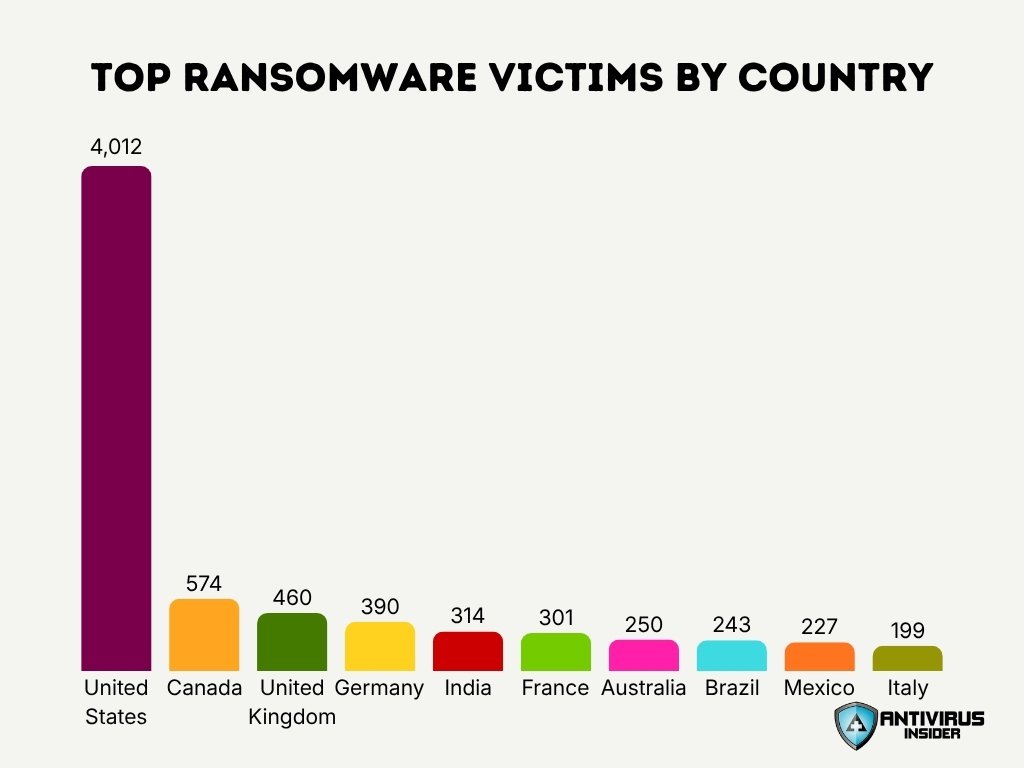
- The United States recorded the highest number of ransomware victims, with 4,012 reported cases, far exceeding every other country in the top 10.
- Canada ranked second with 574 ransomware victims, representing a significant gap of 3,438 fewer victims than the United States.
- The United Kingdom placed third with 460 ransomware victims, making it one of the most frequently targeted countries in Europe.
- Germany ranked fourth, reporting 390 ransomware victims, highlighting the continued threat to major European economies.
- India secured the fifth position with 314 ransomware victims, making it the highest-ranked country in Asia on the list.
- France followed closely behind India with 301 ransomware victims, indicating a similar level of ransomware activity.
- Australia reported 250 ransomware victims, placing seventh among the top affected countries.
- Brazil ranked eighth with 243 ransomware victims, making it the most targeted country in South America in this ranking.
- Mexico recorded 227 ransomware victims, earning the ninth position among the top 10 countries.
- Italy completed the list in tenth place with 199 ransomware victims, remaining below the 200-case threshold.
- The top four countries, the United States, Canada, the United Kingdom, and Germany, each reported more than 390 ransomware victims.
- The United States alone experienced nearly seven times as many ransomware victims as Canada, the second-ranked country, demonstrating a highly concentrated impact.
Ransomware Attack Vectors and Initial Access Statistics
- 79% of ransomware attacks in the 2026 ransomware survey began with compromised identities, making identity compromise the dominant initial-access route in the latest study.
- Across ransomware attacks, malicious email represented 26% of reported technical root causes in 2026, while phishing accounted for 24%, pushing exploited vulnerabilities out of the top position for the first time in four years.
- Exploiting a firewall vulnerability carried particularly high financial consequences. 59% of ransom demands following this entry method reached at least $1 million, compared with 48% across all attacks.
- Across broader 2025 incident investigations, identity-related causes accounted for 67% of all incidents, showing that ransomware’s shift toward identity abuse reflects a wider cyberattack trend.
- Compromised credentials alone accounted for 42.06% of identifiable root causes in 2025 investigations, making stolen or abused account access the largest individual category.
- Vulnerability exploitation represented 16.04% of initial-access causes, while brute-force attacks reached 15.58%. Phishing accounted for 6.35% and more than doubled its occurrence from the prior year.
- Attackers exploited external remote services and valid accounts in 56% of investigated incidents in an earlier 2025 analysis, reinforcing the importance of securing VPNs, firewalls and remote-access accounts.
- The broader 2026 breach dataset found 31% of breaches now begin with vulnerability exploitation, replacing stolen credentials as the leading entry point across the overall breach landscape.
- Third-party involvement reached 48% of breaches in 2026, following a 60% year-over-year increase, meaning ransomware defenses increasingly need to account for suppliers, software providers and other trusted external connections.
- Once attackers gain access, they move quickly. 2026 incident-response data shows a median dwell time of three days, while attackers reached an organization’s Active Directory server in just 3.4 hours on average. In addition, 88% of ransomware payload deployment occurred outside normal business hours.
Data Encryption, Exfiltration, and Double-Extortion Statistics
- In 2026, 56% of ransomware attacks encrypted victim data, reversing the previous downward trend. The comparable rate stood at 50% in 2025 and peaked at 75% in 2023.
- Among 2026 ransomware victims, 16% experienced both encryption and data theft, showing that attackers increasingly combine operational disruption with exposure threats.
- Incident-response investigations found confirmed data exfiltration in 49.77% of ransomware cases. When investigators included suspected exfiltration, the share increased to 53.92%.
- Among ransomware cases with confirmed exfiltration, 49.07% later resulted in publicly leaked data, with publication occurring within an average of 19.5 days after exfiltration.
- Across investigated cyberattacks, attackers began exfiltrating information an average of 78.83 hours after initial compromise. Detection followed only 1.87 hours after exfiltration began, leaving defenders a narrow response window.
- Among more than 100,000 cyber insurance policyholders analyzed for 2025, 70% of ransomware events involved both encryption and data exfiltration. Cases combining these tactics often generated roughly twice the incident cost.
- Enterprise organizations reported a 49% encryption rate in 2025, down from 66% in 2024. At the same time, the share of enterprise attacks stopped before encryption increased from 22% in 2023 to 47% in 2025.
- Extortion without encryption also gained ground during 2025. One ransomware study found the share of attacks in which criminals demanded payment without encrypting data doubled year over year, reflecting a broader shift toward data-theft-based leverage.
- Data theft continued moving closer to the end of the attack lifecycle. Confirmed exfiltration occurred just 1.87 hours before detection on average in examined cases, which makes continuous outbound-traffic monitoring increasingly important.
Top 10 Ransomware Groups by Publicly Claimed Victims
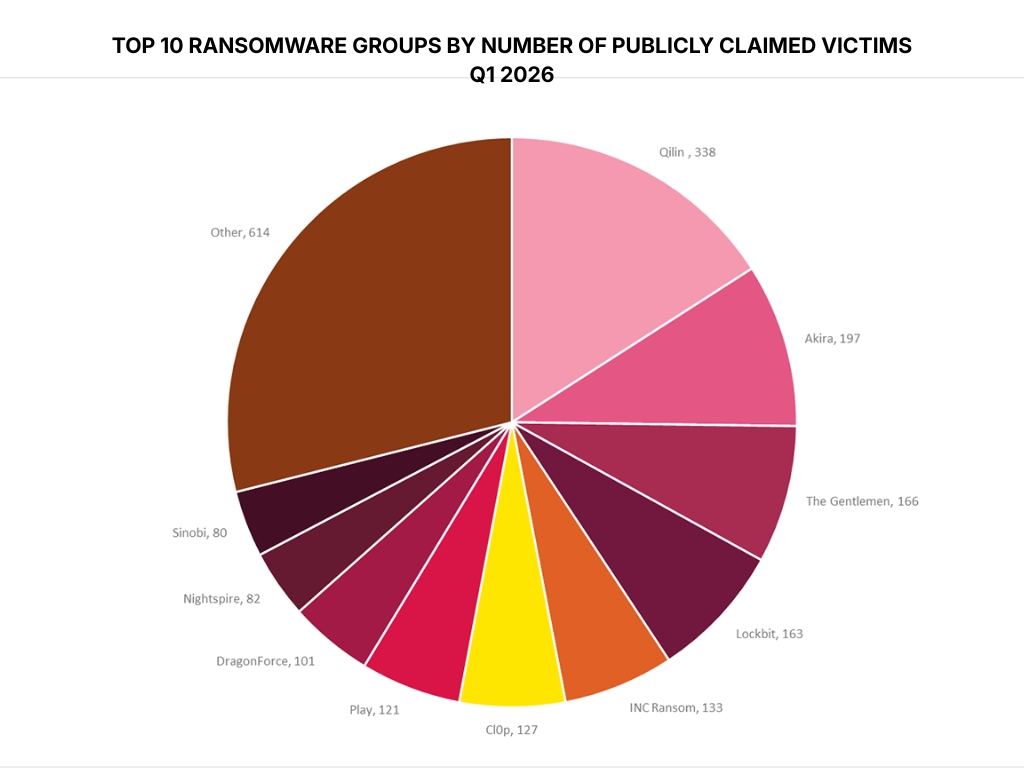
- Qilin was the most active ransomware group in Q1 2026, publicly claiming 338 victims, the highest among all tracked groups.
- Akira ranked second with 197 publicly claimed victims, trailing Qilin by 141 victims.
- The Gentlemen secured third place with 166 victims, narrowly ahead of LockBit, which claimed 163 victims.
- INC Ransom recorded 133 victims, placing fifth among the leading ransomware groups during the quarter.
- Cl0p followed closely with 127 victims, remaining one of the most active ransomware operations.
- Play accounted for 121 publicly claimed victims, highlighting its continued presence in the ransomware landscape.
- DragonForce reported 101 victims, making it the seventh-largest ransomware group by publicly claimed attacks.
- NightSpire and Sinobi were the smallest groups in the top 10, with 82 and 80 victims, respectively.
- Collectively, the top 10 ransomware groups were responsible for 1,508 publicly claimed victims, underscoring the concentration of activity among a limited number of threat actors.
- The “Other” category represented 614 victims, indicating that numerous smaller ransomware groups collectively accounted for a substantial share of publicly claimed attacks beyond the top 10.
- The chart shows a total of 2,122 publicly claimed victims across all ransomware groups during Q1 2026, with the top 10 accounting for approximately 71% of the total.
- The significant gap between Qilin (338 victims) and the second-ranked Akira (197 victims) highlights Qilin’s dominant position in the ransomware ecosystem during the first quarter of 2026.
Ransom Demand, Payment, and Financial Impact Statistics
- Blockchain analysis identified approximately $820 million in ransomware payments during 2025, an 8% decline from the previous year even as claimed ransomware attacks increased sharply.
- Although total payment volume declined, the blockchain-tracked median ransom payment increased 368% year over year to nearly $60,000 in 2025, indicating that successful payments became more concentrated among higher-value cases.
- A 2026 victim survey placed the median ransom demand at $698,000, representing a 65% decline over two years.
- The median ransom payment among surveyed 2026 victims reached $769,000, compared with $1 million in the previous year’s study.
- Among organizations that paid ransomware operators in 2026, 51% negotiated the payment below the original demand, highlighting the growing role of structured negotiation and incident-response support.
- Cyber insurance claims data covering 2025 found that initial ransom demands increased 47% year over year, pushing the average initial demand above $1 million.
- Despite higher demands, 86% of ransomware victims in that insurance dataset refused to pay, indicating that stronger backups and response planning increasingly give organizations alternatives.
- In Q4 2025, the average ransomware payment reached $591,988, up 57% from Q3, while the median payment climbed 132% to $325,000. A small number of large settlements drove much of the increase.
- The proportion of ransomware cases resulting in payment fell to approximately 20% in Q4 2025, setting a new low after payment rates previously tended to remain between 25% and 35%.
Ransomware Downtime, Recovery Cost, and Data Recovery Statistics
- The average cost of recovering from ransomware reached $1.7 million per incident in 2026, excluding ransom payments. That figure increased 11% year over year.
- In 2025, average recovery costs stood at $1.53 million, down 44% from $2.73 million in 2024. The reversal in 2026 shows that recovery expenses remain volatile even when ransom payments decline.
- 55% of organizations recovered within one week after a ransomware attack in the 2026 survey, compared with 53% in the preceding study.
- Another 16% recovered in less than one day in 2026, indicating that well-prepared organizations can restore critical systems without experiencing prolonged outages.
- Backup-based data recovery increased to 66% of encrypted-data incidents in 2026, a 12-percentage-point increase from 2025.
- In the 2025 survey, only 54% of organizations used backups to restore encrypted information, the lowest backup-recovery rate recorded during the six years of that study.
- Organizations frequently used several restoration methods simultaneously in 2025. 49% paid to recover data, 54% used backups and 29% relied on other methods, including publicly available decryption tools.
- Only 18% of ransomware victims required more than one month to recover in 2025, compared with roughly 34% to 35% in 2024.
- At the same time, 53% recovered fully within one week in 2025, up sharply from 35% in 2024, suggesting that recovery speed improved before rising costs returned in 2026.
Top Enterprise Defenses Against Ransomware Statistics
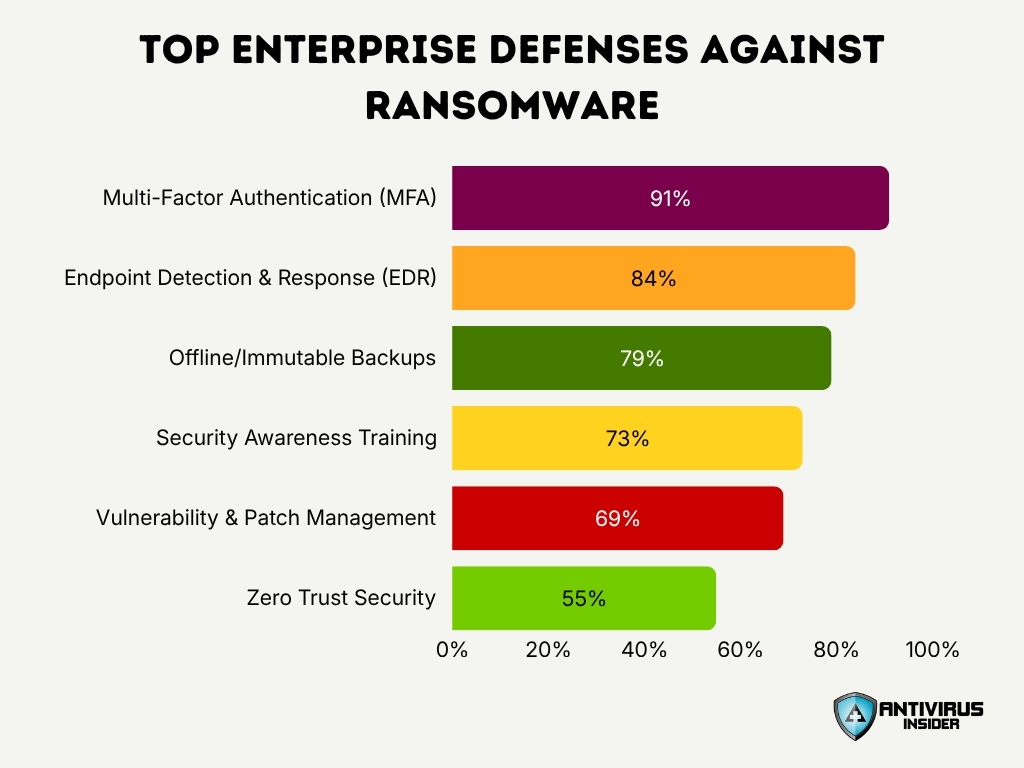
- Multi-Factor Authentication (MFA) is the most widely adopted ransomware defense, with 91% of organizations implementing it to strengthen account security and reduce unauthorized access.
- Endpoint Detection & Response (EDR) is used by 84% of enterprises, making it one of the most common technologies for detecting, investigating, and responding to ransomware threats.
- Offline and immutable backups have been adopted by 79% of organizations, highlighting the importance of maintaining recoverable copies of critical data during ransomware incidents.
- Security awareness training is provided by 73% of organizations, reflecting a strong emphasis on reducing phishing risks and improving employee cybersecurity awareness.
- Vulnerability and patch management is implemented by 69% of enterprises, helping organizations minimize the risk of ransomware exploiting known software vulnerabilities.
- Zero Trust Security has been adopted by 55% of organizations, indicating that more than half of enterprises are moving toward continuous verification and least-privilege access models.
- The gap between the most adopted measure (MFA at 91%) and the least adopted measure (Zero Trust Security at 55%) is 36 percentage points, showing varying levels of security maturity across organizations.
- Identity protection technologies, such as MFA, have achieved higher adoption than broader architectural approaches like Zero Trust, suggesting organizations often prioritize immediate access security improvements.
- The data shows that four of the six listed ransomware defenses have adoption rates of more than 70%, demonstrating that layered security has become a common enterprise strategy.
- Organizations increasingly combine MFA, EDR, backups, employee training, patch management, and Zero Trust to create a multi-layered defense against evolving ransomware attacks.
Ransomware Prevention, Incident Response, Backup, and Cyber Insurance Statistics
- In 2025, 44% of organizations stopped ransomware before attackers encrypted their data, the highest prevention rate recorded during six years of the corresponding survey.
- Organization size continues to influence prevention outcomes. In 2026, only 34% of organizations with 100 to 250 employees stopped attacks before encryption or extortion, compared with 46% of organizations employing 3,001 to 5,000 people.
- Multifactor authentication was deployed in some form in 97% of ransomware incidents caused by compromised credentials, showing that MFA coverage and implementation quality matter as much as simply enabling the control.
- Broader breach research found that software vulnerability exploitation accounted for 31% of breach entry points in 2026, overtaking stolen credentials as the leading initial-access category.
- Only 26% of critical known exploited vulnerabilities were fully remediated during 2025, down from 38% the previous year. Median remediation time also increased from 32 days to 43 days.
- Third-party involvement reached 48% of breaches in 2026, following a 60% year-over-year increase. The finding gives ransomware prevention teams another reason to extend controls to vendors and software suppliers.
- Among insured organizations with closed cyber claims, 64% incurred no out-of-pocket loss in the 2025 claims dataset, illustrating how insurance combined with response support can reduce direct financial exposure.
- Incident-response specialists negotiated ransomware payments down by an average of 65% in the same insurance dataset when a payment became necessary.
- Cyber claims severity declined 19% year over year during 2025 among the analyzed policyholders despite continued growth in cyber threats.
- Across a separate international cybersecurity survey published for 2026, security budgets increased by an average of 5.6%, reflecting continued organizational investment in prevention, recovery, and cyber resilience.
Frequently Asked Questions (FAQs)
Ransomware operators received approximately $820 million in on-chain cryptocurrency payments during 2025, despite an increase in the number of attacks.
Approximately 79% of ransomware attacks in 2026 began with compromised identities, making it the leading initial access method.
The median ransom payment reported in 2026 was $769,000, down from $1 million in the previous year.
About 56% of ransomware attacks in 2026 successfully encrypted victim data, compared with 50% in 2025.
The average cost to recover from a ransomware attack in 2026 reached $1.7 million per incident, excluding any ransom payment.
Conclusion
Ransomware remained one of the most significant cybersecurity threats, despite notable improvements in organizational resilience. Attack volumes continued to rise, while more organizations relied on backups, stronger incident response, and cyber insurance instead of paying attackers. At the same time, ransomware groups expanded their use of data theft, double extortion, and ransomware-as-a-service, making attacks more sophisticated and financially damaging.
Organizations that invest in proactive security measures, identity protection, vulnerability management, employee awareness, and tested recovery plans are better positioned to reduce operational disruption and financial losses. As ransomware tactics continue to evolve, maintaining a layered cybersecurity strategy remains essential for businesses of every size.
