



Scams have become a major financial and digital-security problem in the U.S. Fraudsters now reach consumers through social media, cryptocurrency platforms, text messages, phone calls, and AI-assisted impersonation. The impact extends from households that lose savings to banks, ecommerce companies, and online platforms that must detect fraudulent transactions and compromised identities. Recent data show that reported losses continued to climb sharply, making scam prevention increasingly important across consumer finance and digital commerce.
Editor’s Choice
- Reported U.S. consumer fraud losses reached approximately $15.9 billion in 2025, representing an increase of roughly 25% from the previous year’s total.
- Investment scams generated $7.9 billion in reported consumer losses in 2025, making investment fraud the largest loss category in the consumer reporting data.
- Imposter scams produced more than $3.5 billion in reported losses during 2025 and remained the most frequently reported fraud category.
- Nearly one-third of fraud reports in 2025 involved an imposter scam, highlighting how heavily scammers rely on pretending to represent trusted people, companies, or government agencies.
- Cyber-enabled fraud accounted for $17.70 billion in reported internet-crime losses in 2025 and approximately 85% of all losses submitted through the internet crime reporting system.
- Cryptocurrency-related complaints produced more than $11 billion in reported losses from 181,565 complaints in 2025.
- Adults age 60 and older reported approximately $7.7 billion in internet-crime losses in 2025, a 37% increase from 2024.
- Social media was the starting point for nearly 30% of reported scams that resulted in a financial loss in 2025, with reported losses from social media-originated scams reaching $2.1 billion.
Recent Developments
- The overall rate of suspected digital fraud declined to 3.8% of digital transactions in 2025, even as account takeover, scam activity, and identity-related risks increased.
- Suspected account takeover fraud increased by 37% from 2024 to 2025, indicating that criminals increasingly target existing accounts rather than relying only on newly created fraudulent identities.
- About 8.3% of digital account-creation attempts analyzed in 2025 were suspected of fraud, making account creation the highest-risk stage of the measured digital customer lifecycle.
- U.S. data-breach volume increased 47% between 2024 and 2025, expanding the pool of compromised identity information that criminals can potentially exploit.
- Among consumers who said fraudsters targeted them during a recent three-month period, 33% encountered phishing, making it the most commonly reported scheme in that survey.
- In 2025, 26% of surveyed consumers said they had lost money to digital fraud during the previous year.
- Consumer confidence increasingly depends on data security; 77% of surveyed consumers identified confidence that their personal information remains secure as the most important factor when choosing an online business.
- Internet crime complaints increased by approximately 17% between 2024 and 2025, rising from 859,532 to more than 1 million reports.
Overview of Scam Prevalence
- Global research involving 46,000 adults across 42 markets found widespread scam exposure during the 12 months covered by the 2025 study.
- Another measure from the same global research found that seven in 10 adults had encountered a scam during the previous 12 months when broader scam encounters were counted.
- About 13% of adults globally encountered scams at least once a day, showing that scam exposure has become routine for a notable share of consumers.
- In a separate survey covering 18 countries and regions, 53% of adults said fraudsters targeted them through email, websites, phone calls or text messages from August through December 2024.
- Among consumers in that 18-market survey, 29% said they lost money to email, online, phone or text fraud during the previous year.
- Consumers who lost money in that survey reported a median loss of $1,747, illustrating that individual losses can reach well beyond small unauthorized transactions.
- U.S. consumer reporting systems received 6.5 million reports across fraud, identity theft and other consumer-protection categories in 2024, showing the broader volume of consumer problems surrounding scams and identity misuse.
- In 2024, 38% of people who filed a fraud report said they lost money, up from 27% in 2023, even though the overall number of fraud reports remained relatively stable.
Most Common Types of Scams
- Imposter scams generated more than 1 million consumer reports in 2025, making impersonation the most frequently reported fraud category for the sixth consecutive year.
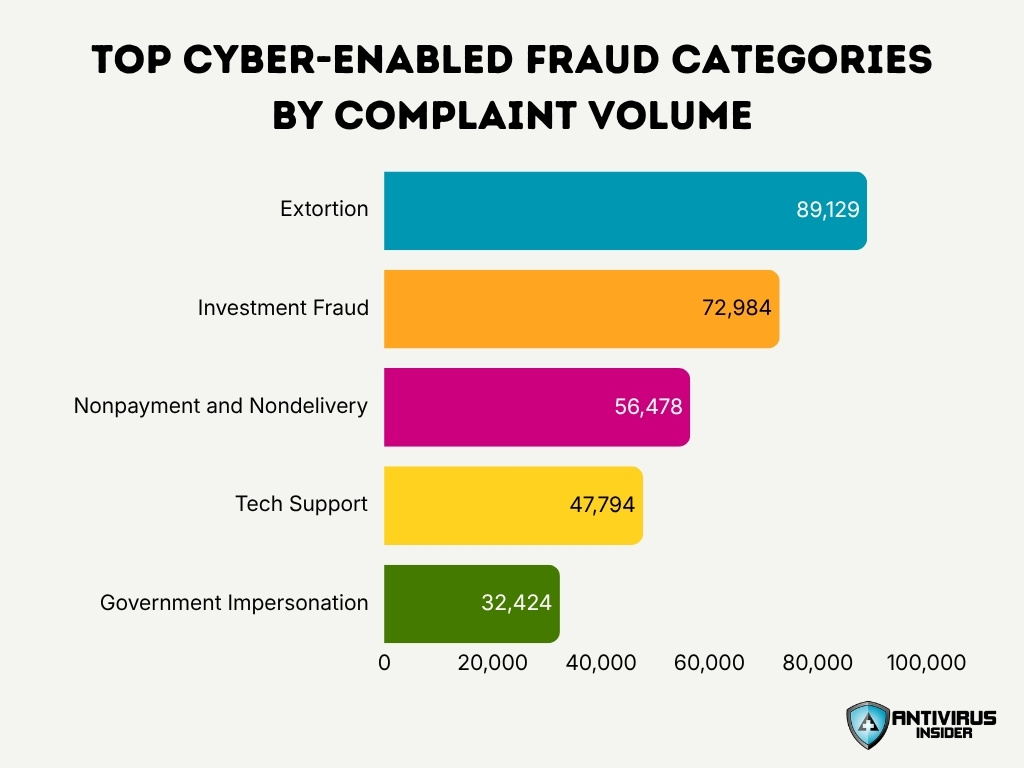
- Extortion generated 89,129 cyber-enabled fraud complaints in 2025, the largest count among the five leading cyber-enabled fraud categories listed in the annual internet crime data.
- Investment fraud generated 72,984 cyber-enabled complaints during 2025 and produced substantially greater financial losses than other major cyber-enabled scam categories.
- Nonpayment and nondelivery fraud accounted for 56,478 cyber-enabled complaints in 2025, reflecting continued risks when consumers or sellers exchange money and goods online.
- Tech support scams produced 47,794 cyber-enabled complaints during 2025. These schemes commonly rely on false security warnings or impersonation to convince victims that their devices or accounts require urgent assistance.
- Government impersonation generated 32,424 cyber-enabled complaints in 2025, placing it among the five leading cyber-enabled fraud categories by complaint volume.
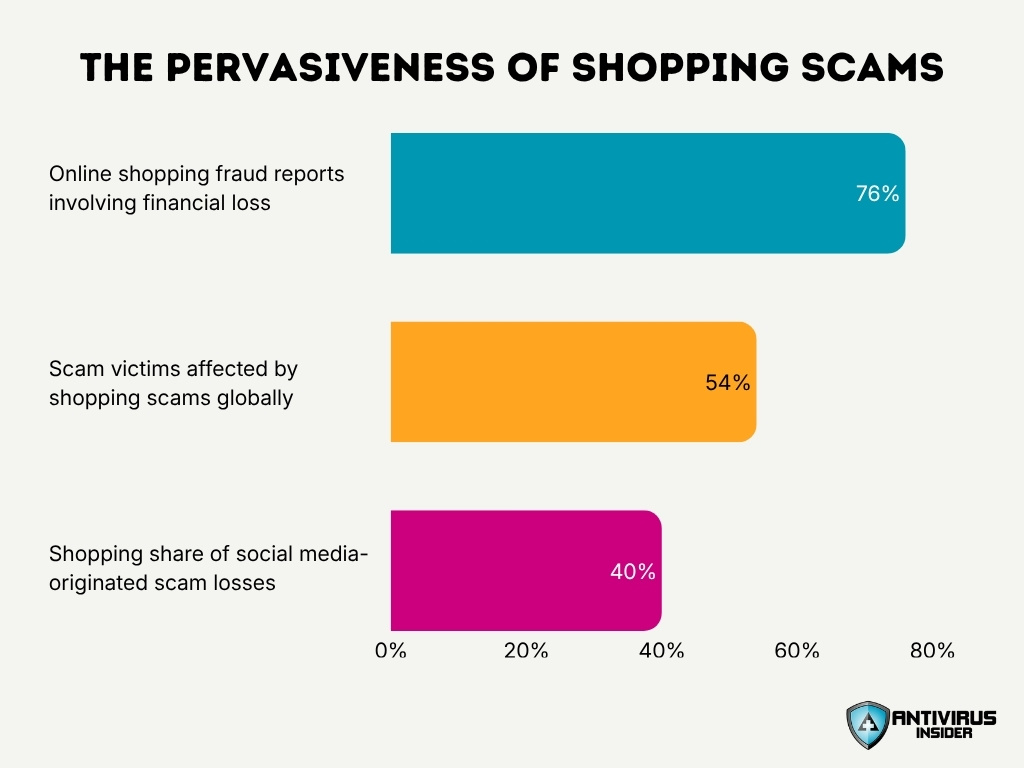
- Shopping scams affected 54% of scam victims in the 2025 global study, making shopping-related schemes the most commonly cited category among victims surveyed.
- Investment scams and scams involving unexpected money each affected 48% of victims in the same global research, demonstrating how both financial opportunity and unexpected-payment narratives remain common scam hooks.
Financial Losses From Scams
- U.S. consumers reported losing more than $12.5 billion to fraud in 2024, a 25% increase from 2023.
- Investment scams alone generated $5.7 billion in reported consumer losses in 2024, up 24% from the previous year.
- Internet crime produced more than $16 billion in reported losses during 2024, representing a 33% increase from 2023.
- Investment fraud accounted for $8.65 billion in cyber-enabled fraud losses in 2025, or nearly 49% of losses within that fraud grouping.
- Business email compromise generated approximately $3.05 billion in cyber-enabled losses in 2025, making it the second-costliest category in that dataset.
- Tech support fraud resulted in approximately $2.13 billion in reported cyber-enabled losses during 2025.
- Confidence and romance scams produced about $929.3 million in reported cyber-enabled losses in 2025.
- Government impersonation generated approximately $797.9 million in cyber-enabled losses during 2025.
- Business impersonators caused nearly $1 billion in reported consumer losses in 2025, while government impersonators accounted for about $920 million under the separate consumer reporting methodology.
- Social media-originated scams generated eight times as much reported financial loss in 2025 as in 2020, illustrating how social platforms have grown as a channel for financially damaging scams.
Scam Victim and Exposure Statistics
- Adults age 60 and older represented 24.2% of cyber-enabled fraud complaints with a reported age in 2025, the largest share among the listed age groups.
- Adults ages 40 to 49 accounted for 14.5% of cyber-enabled fraud reports by age in 2025.
- Adults ages 30 to 39 represented 14.3% of age-reported cyber-enabled fraud complaints during the year.
- Adults ages 20 to 29 accounted for 13.2% of cyber-enabled fraud complaints by reported age, while those ages 50 to 59 represented 13.1%.
- People aged 20 or younger represented 4.3% of cyber-enabled fraud complaints with age information in 2025, considerably below the share reported by older adults.
- In global research, 69% of scam victims reported substantial stress as a consequence of their experience, showing that scams can cause harm beyond the direct financial loss.
- Another 17% of scam victims reported losing confidence after their experience, while 14% said scams increased tension within their families.
- Scam victimization showed regional differences: South America, Africa and Oceania recorded some of the highest exposure levels, with as many as one in four adults losing money to scams in the previous year.
- In 2024, Americans over age 60 reported nearly $5 billion in internet-crime losses and also submitted more complaints than any other age group.
- The following year, reported losses among Americans over 60 climbed to approximately $7.7 billion, meaning this age group experienced an increase of about $2.7 billion in one year.
Most Costly Internet Crimes
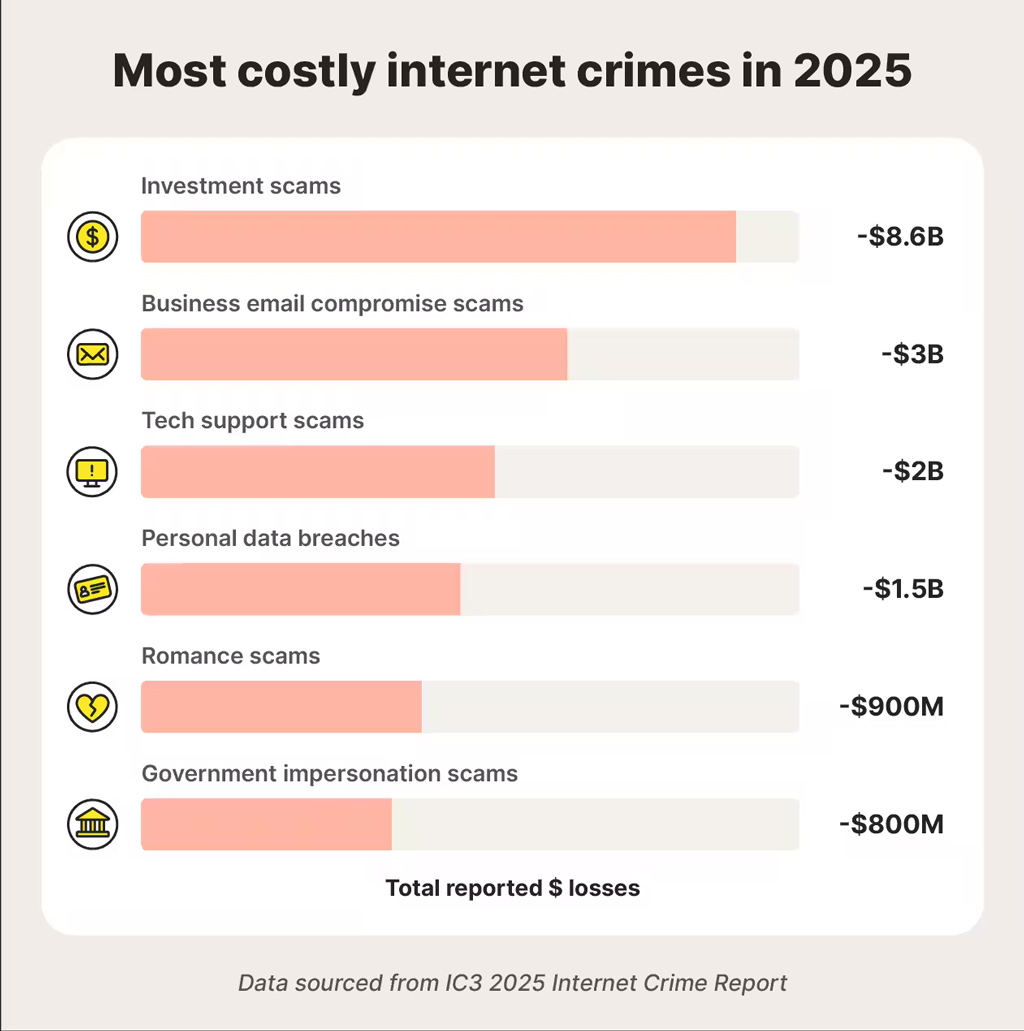
- Investment scams caused the highest reported losses at $8.6 billion, making them the costliest internet crime category shown.
- Business email compromise scams ranked second, generating approximately $3 billion in reported losses.
- Tech support scams accounted for another $2 billion, highlighting the financial impact of fraudulent support schemes.
- Personal data breaches resulted in around $1.5 billion in reported losses during 2025.
- Romance scams caused roughly $900 million in losses, remaining a major source of consumer fraud.
- Government impersonation scams generated approximately $800 million in reported losses.
- Together, the six internet crime categories shown accounted for about $16.8 billion in reported losses.
- Investment scams alone represented about 51% of the combined losses across these six categories.
Online and Digital Scam Statistics
- Nearly 30% of consumers who reported losing money to a scam in 2025 said the scam started on social media.
- Consumers reported losing approximately $2.1 billion to social media-originated scams in 2025, compared with $1.9 billion in 2024.
- Reported social media scam losses have increased about eightfold since 2020, when losses totaled approximately $261 million.
- Websites and apps accounted for 31% of fraud reports involving a financial loss and a known contact method in 2025, the largest share among the measured channels.
- Social media accounted for another 28% of loss reports, followed by phone calls at 11%, email at 10% and text messages at 7%.
- Investment schemes caused approximately $1.1 billion in losses from scams that originated on social media in 2025, representing more than half of all reported social media scam losses.
- Shopping scams represented more than 40% of social media scam loss reports in 2025, making them the most frequently reported scam type originating on social platforms.
- Romance scams that originated on social media generated approximately $298 million in reported losses during 2025.
- Reported social media scam losses rose from $789 million in 2021 to $1.2 billion in 2022, $1.5 billion in 2023, $1.9 billion in 2024, and $2.1 billion in 2025.
- Social media generated the highest reported scam losses among every age group except consumers age 80 and older in 2025; for that oldest group, phone calls ranked first.
Phone and Text Message Scam Statistics
- Consumers reported losing $470 million to scams that started with text messages in 2024, five times the amount reported in 2020.
- Text messages accounted for 7% of fraud reports involving a loss and a known contact method in 2025.
- Phone calls represented 11% of fraud loss reports with a known contact method in 2025, ranking behind websites or apps and social media but ahead of text messages.
- Fake package-delivery messages were the most commonly reported text scam in 2024, often directing recipients to fraudulent sites that requested payment or personal information.
- Bogus job offers, including online task scams, were another leading category of text-message fraud in 2024.
- Fake bank and fraud-alert texts also ranked among the most commonly reported text scams, often directing consumers to call a fraudulent support number or respond to the message.
- Unpaid-toll scams became another major text fraud format. In one regional example, complaints involving fraudulent toll texts reached 1,573 in part of March 2025, compared with 1,720 complaints during the preceding 14-month period.
- Research cited in consumer-protection guidance found that text-message open rates can reach 98%, giving fraudulent messages a high likelihood of reaching their intended audience.
- The national registry for limiting legal telemarketing calls contained approximately 258.5 million active registrations by Sept. 30, 2025, after more than 4.7 million additional numbers joined during the fiscal year.
- Despite persistent unwanted calls, complaints in fiscal 2025 remained approximately 48% below fiscal 2021 levels, when consumers submitted roughly 5 million unwanted-call reports.
Scam Statistics by Age and Demographics
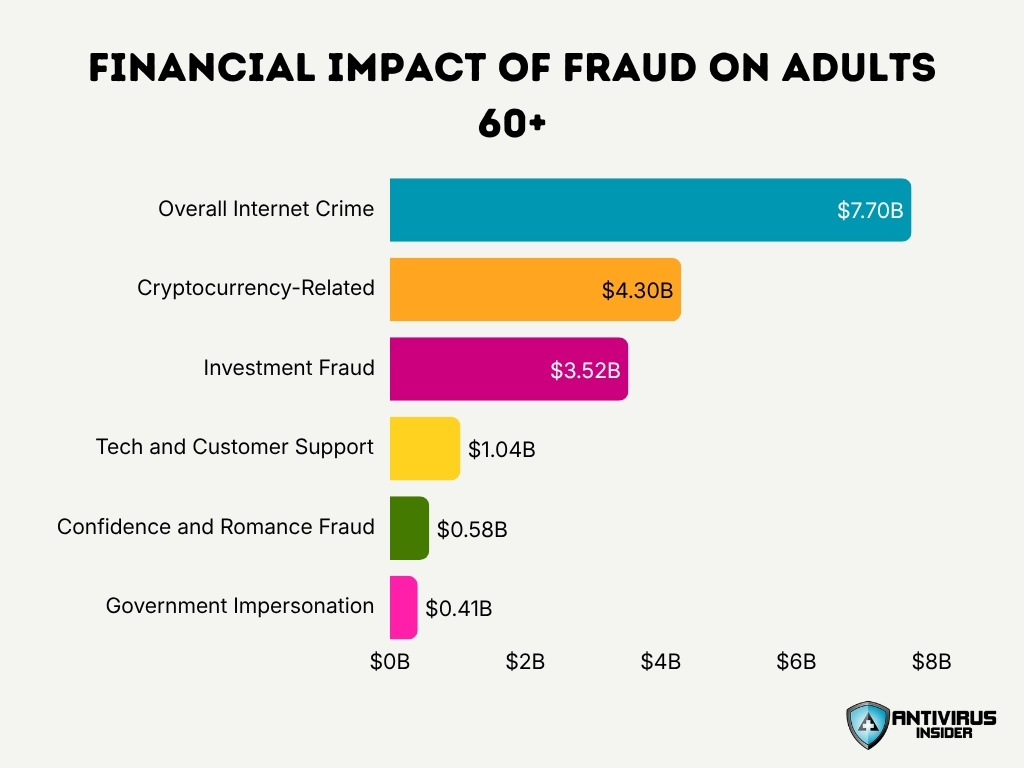
- Americans age 60 and older reported approximately $7.7 billion in internet-crime losses in 2025, up 37% from the previous year.
- More than 200,000 complaints came from people age 60 and older in 2025, compared with 147,127 elder-fraud complaints reported for 2024.
- Investment fraud alone cost people age 60 and older approximately $3.52 billion in 2025, almost double the $1.83 billion reported for this age group in 2024.
- Tech and customer support fraud generated approximately $1.04 billion in losses among people 60 and older in 2025, compared with about $982.4 million in 2024.
- Confidence and romance fraud cost Americans age 60 and older about $584 million in 2025, rising from roughly $389 million in 2024.
- Government impersonation losses among people 60 and older nearly doubled from approximately $208.1 million in 2024 to $413.2 million in 2025.
- Cryptocurrency-related schemes generated more than 42,000 complaints from older Americans in 2025 and approximately $4.3 billion in reported losses.
- Among social media scam reports involving a loss in 2025, social media accounted for 40% of reports from ages 18-29, compared with 32% for ages 30-39, 32% for ages 40-49 and 32% for ages 50-59.
- The share of loss reports that started on social media declined with age, reaching 29% among ages 60-69, 23% among ages 70-79, and 14% among people 80 and older.
- People 80 and older reported a median individual fraud loss exceeding $1,600 in 2024, highlighting the greater financial severity of fraud among the oldest consumers.
Email and Phishing Scam Statistics
- Phishing and spoofing generated 191,561 internet-crime complaints in 2025, keeping the category among the most frequently reported forms of cybercrime.
- The 2025 phishing and spoofing complaint total was slightly below the 193,407 complaints recorded in 2024, although reported financial losses increased substantially.
- Reported phishing and spoofing losses reached approximately $215.8 million in 2025, compared with about $70 million in 2024.
- That means reported phishing and spoofing losses grew to more than three times their 2024 level, despite the number of complaints declining slightly.
- Business email compromise generated 24,768 complaints in 2025, up from 21,442 in 2024.
- Business email compromise losses reached approximately $3.05 billion in 2025, compared with $2.77 billion in 2024.
- Email accounted for 10% of 2025 fraud loss reports in which consumers identified a standard contact method.
- In 2024, email was the most commonly reported way consumers said scammers contacted them, marking the second consecutive year that email ranked first by reported contact volume.
- Among people age 60 and older, phishing and spoofing produced more than 48,000 complaints in 2025, representing more than 24% of complaints from older victims.
- One regional example shows the financial trend clearly: reported phishing losses in Florida exceeded $12 million in 2025, compared with roughly $4 million the year before.
Investment and Cryptocurrency Scam Statistics
- Investment fraud generated 72,984 internet-crime complaints in 2025, compared with 47,919 in 2024 and 39,570 in 2023.
- Reported investment fraud losses climbed to approximately $8.65 billion in 2025, up from $6.57 billion in 2024.
- Investment schemes represented nearly 49% of reported cyber-enabled fraud losses in 2025.
- Complaints involving cryptocurrency totaled 181,565 in 2025, an increase of 21% from 2024.
- Cryptocurrency-related reported losses reached approximately $11.37 billion in 2025, 22% higher than in 2024.
- The average reported loss among cryptocurrency complaints reached approximately $62,604 in 2025.
- Another 18,589 cryptocurrency complainants lost more than $100,000 each during 2025.
- Consumers age 60 and older accounted for about $4.43 billion in cryptocurrency-related losses in 2025, the largest loss total of any age group.
- Consumers ages 50-59 reported approximately $2.14 billion in cryptocurrency-related losses, while ages 40-49 reported about $1.55 billion.
- Complaints referencing certain social media and messaging-based stock manipulation schemes increased by at least 300% in 2025 compared with 2024, illustrating the expansion of investment fraud beyond cryptocurrency alone.
Romance and Dating Scam Statistics
- Confidence and romance scams generated 23,159 internet-crime complaints in 2025, up from 17,910 in 2024.
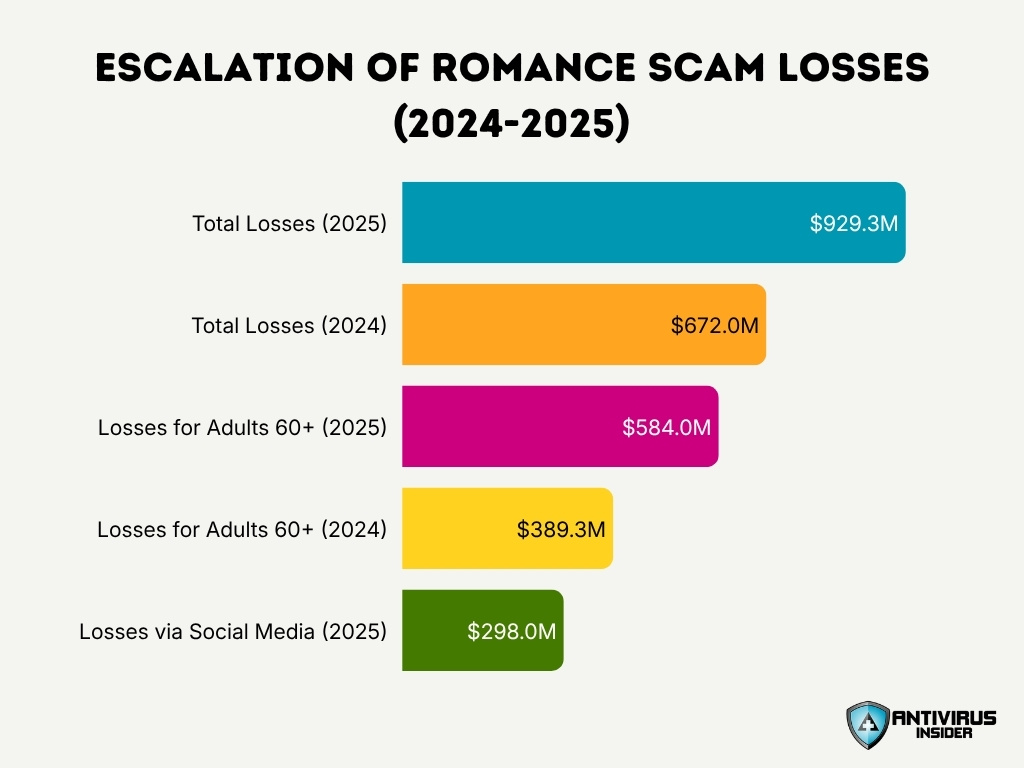
- Reported confidence and romance scam losses reached approximately $929.3 million in 2025, compared with $672 million in 2024.
- The 2025 complaint total was approximately 29% higher than in 2024, based on the increase from 17,910 to 23,159 reports.
- Reported financial losses from confidence and romance fraud increased by approximately $257 million between 2024 and 2025.
- Adults age 60 and older reported about $584 million in confidence and romance scam losses during 2025, compared with $389.3 million in 2024.
- Losses among older victims therefore increased by approximately 50% in one year, demonstrating the financial severity of relationship-based scams for older Americans.
- Romance scams that originated through social media generated approximately $298 million in reported losses in 2025.
- Among social media-originated scams, romance fraud ranked second in aggregate reported losses behind investment fraud during 2025.
- Cryptocurrency investment fraud can begin as a romance or confidence scheme before the scammer directs the victim toward a fraudulent investment opportunity, creating overlap between the two fraud categories.
- “Wrong number” text scams can also develop into relationship-based conversations before transitioning into romance or investment fraud, linking text-message scams with longer-term confidence schemes.
Imposter and Government Scam Statistics
- Consumers reported losing $3.5 billion to imposter scams in 2025, nearly three times the amount reported in 2020.
- Imposter scams represented nearly one in three fraud reports in 2025, making them the most frequently reported consumer fraud category.
- Business impersonation scams generated nearly $1 billion in reported consumer losses during 2025.
- Government impersonation scams accounted for approximately $920 million in reported consumer losses in 2025, compared with $789 million in 2024.
- Under a separate internet-crime reporting methodology, government impersonation generated 32,424 complaints in 2025, almost double the 17,367 complaints recorded in 2024.
- Reported internet-crime losses from government impersonation reached approximately $797.9 million in 2025, up from $405.6 million in 2024.
- People age 60 and older accounted for more than 8,600 government impersonation complaints during 2025.
- Government impersonation losses among consumers age 60 and older reached approximately $413.2 million in 2025, compared with $208.1 million a year earlier.
- More than 100 complaints involving impersonation of internet-crime personnel were recorded between December 2023 and February 2025, showing how scammers can target previous fraud victims with fake recovery offers.
- Account-takeover schemes involving criminals impersonating financial institution support teams generated more than 5,100 complaints and over $262 million in losses from January through November 2025.
Tech Support Scam Statistics
- Tech and customer support fraud generated 47,794 complaints in 2025, placing it among the five most reported cyber-enabled fraud categories.
- Reported tech and customer support losses reached approximately $2.13 billion in 2025, making the category the third-largest cyber-enabled fraud type by losses.
- Tech support fraud accounted for roughly 12% of the $17.7 billion in reported cyber-enabled fraud losses during 2025.
- Americans age 60 and older reported approximately $1.04 billion in tech and customer support losses in 2025.
- Tech support losses among consumers 60 and older increased from approximately $982.4 million in 2024 to more than $1.04 billion in 2025.
- The three-year trend among people 60 and older is particularly notable: reported tech support losses rose from approximately $589.8 million in 2023 to $982.4 million in 2024 and $1.04 billion in 2025.
- In South Carolina alone, tech support scam losses reached $28.8 million in 2025, almost double the $14.5 million reported in 2024.
- A joint investigation into overseas scam call centers identified approximately 660 U.S. victims of linked government impersonation and tech support schemes since 2022, with reported losses totaling about $48.8 million.
- Tech support and account-takeover scams triggered 360 Financial Fraud Kill Chain incidents in 2025, showing how frequently rapid intervention became necessary to try to stop fraudulent transfers.
Shopping and Ecommerce Scam Statistics
- Online shopping and negative reviews generated 383,441 fraud reports in 2024, making the category the second-most commonly reported type of fraud that year.
- Approximately 76% of online shopping fraud reports in 2024 involved a reported financial loss, one of the highest loss-incidence rates among leading fraud categories.
- Reported losses connected with online shopping and negative reviews reached approximately $432 million in 2024.
- The median reported loss for online shopping fraud was $130 in 2024, considerably below high-value investment fraud but significant because of the category’s large complaint volume.
- Nonpayment and nondelivery schemes produced 56,478 internet-crime complaints in 2025, making the category one of the five leading cyber-enabled fraud types by complaint count.
- Reported nonpayment and nondelivery losses reached approximately $503.4 million in 2025.
- Shopping scams affected 54% of scam victims in a 2025 international survey covering 46,000 adults across 42 markets, making shopping fraud the most frequently cited scam category among surveyed victims.
- Shopping scams represented more than 40% of social media-originated scam loss reports in 2025, although investment scams caused substantially greater aggregate losses.
- One regional analysis found more than $1.6 million in nonpayment and nondelivery losses across several northern Florida markets during the three-month period from November 2024 through January 2025.
- Online shopping problems ranked fourth among all consumer report categories in 2024, with nearly 385,000 reports when fraud and other related reports were combined.
Employment and Job Offer Scam Statistics
- Employment scams generated 24,688 internet-crime complaints in 2025, putting the category close to business email compromise and confidence or romance fraud in complaint volume.
- Reported employment scam losses reached approximately $362.9 million in 2025.
- Job and employment agency scam reports tripled between 2020 and 2024, showing how rapidly fraudulent recruiting activity expanded during the first half of the decade.
- Reported losses specifically associated with job and employment agency scams climbed from $90 million in 2020 to $501 million in 2024.
- The broader business and job opportunities category produced 126,217 fraud reports in 2024, with 36% of reports indicating a monetary loss.
- Total losses in that broader category reached approximately $751 million in 2024, with a median reported loss of $2,250.
- Task scam reports rose from essentially zero in 2020 to about 5,000 in 2023, demonstrating how quickly this specific scam format emerged.
- Consumers submitted approximately 20,000 task scam reports in the first half of 2024 alone, about four times the number reported throughout 2023.
- Task scams accounted for an estimated nearly 40% of 2024 job scam reports, making gamified work offers a major component of employment fraud.
- Overall reported job scam losses exceeded $220 million during the first six months of 2024, after more than tripling between 2020 and 2023.
Identity Theft and Credit Card Fraud Statistics
- Consumer reporting systems recorded 1,135,291 identity theft reports in 2024, representing 17.5% of the 6.47 million fraud, identity theft, and other consumer reports received that year.
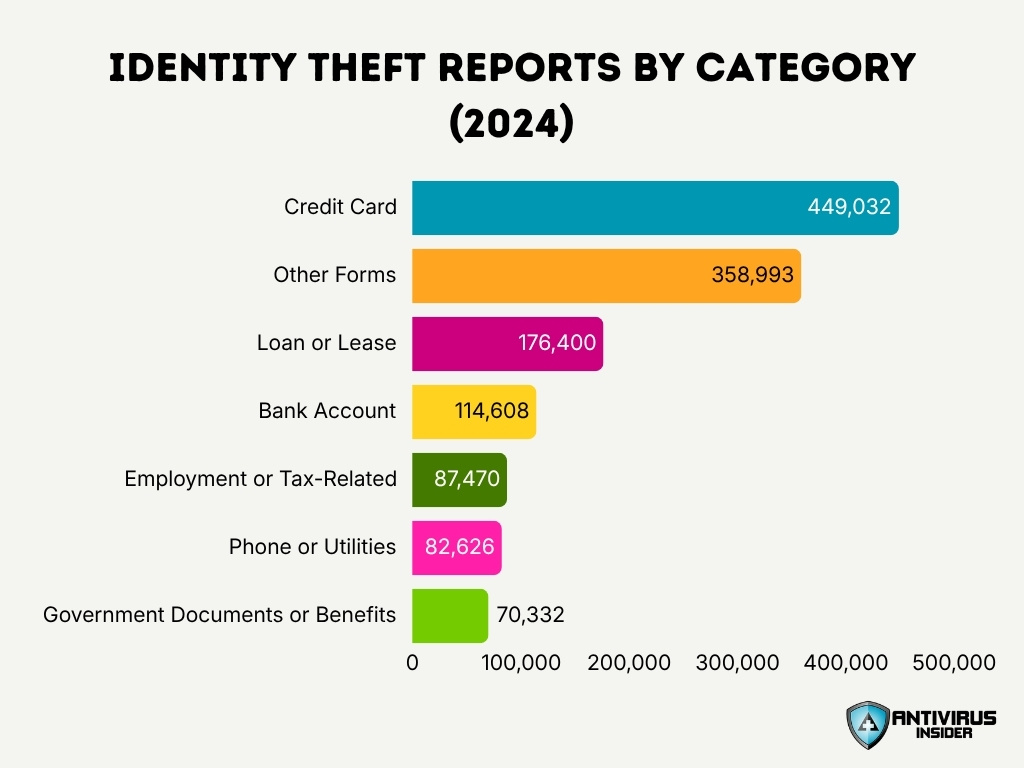
- Credit card identity theft was the leading identity theft type in 2024, generating 449,032 reports.
- Other forms of identity theft accounted for 358,993 reports, while loan or lease identity theft generated another 176,400 reports.
- Bank account identity theft accounted for 114,608 reports in 2024, showing the continued importance of financial-account credentials to identity criminals.
- Employment or tax-related identity theft generated 87,470 reports, while phone or utilities identity theft accounted for 82,626 reports.
- Government documents or benefits identity theft generated another 70,332 reports in 2024.
- Internet-crime reporting recorded 31,675 identity theft complaints in 2025, with approximately $185.8 million in associated reported losses.
- Credit card and check fraud generated 18,774 internet-crime complaints and approximately $282.7 million in reported losses during 2025.
- Personal data breaches generated 67,456 complaints in 2025 and approximately $1.31 billion in reported losses, demonstrating the financial impact surrounding compromised personal information.
- Among people age 60 and older, identity theft complaints rose from 3,010 in 2023 to 4,064 in 2024 and 5,359 in 2025, while reported identity theft losses for this age group reached about $48.5 million in 2025.
Scam Reporting and Unreported Scam Statistics
- More than 1 million internet-crime complaints were submitted in 2025, up from 859,532 in 2024.
- The 2025 volume equates to nearly 3,000 complaints per day, illustrating the scale of incidents reaching federal investigators through just one reporting channel.
- Cyber-enabled fraud accounted for approximately 452,868 complaints in 2025, equivalent to 45% of all complaints submitted through that reporting system.
- Those cyber-enabled fraud reports accounted for 85% of all reported losses, or approximately $17.7 billion, despite representing less than half of complaint volume.
- Consumer reporting systems received 6.47 million fraud, identity theft and other reports in 2024, including approximately 2.6 million fraud reports and 1.14 million identity theft reports.
- Among people who reported fraud in 2024, 38% said they lost money, compared with 27% in 2023. This increase occurred even though overall fraud report volume remained relatively stable.
- International survey research found that 57% of adults experienced a scam during the previous 12 months and 23% lost money, illustrating the much broader level of exposure captured through population surveys.
- The same 2025 research surveyed 46,000 adults across 42 markets, while a broader measure found seven in 10 adults had encountered scams and 13% encountered one at least daily.
- Current consumer-protection analysis cautions that most scams are not reported to government authorities, meaning documented losses likely understate the actual financial impact.
- Reporting can also support fund recovery. During 2025, rapid-response teams initiated 655 Financial Fraud Kill Chain incidents involving critical-infrastructure businesses and organizations and froze about $146.6 million of $261.5 million in reported losses, a 56% success rate for those incidents.
Frequently Asked Questions (FAQs)
Consumers reported losing approximately $15.9 billion to fraud in 2025, about 25% more than in 2024.
Authorities received 1,008,597 internet-crime complaints in 2025, up from 859,532 in 2024.
Cryptocurrency-related complaints totaled 181,565 and more than $11 billion in reported losses in 2025.
Consumers reported $3.5 billion in imposter scam losses in 2025, nearly three times the amount reported in 2020.
Consumers reported $2.1 billion in losses from scams that started on social media, about eight times the 2020 figure, and nearly 30% of loss-reporting victims said their scam began on social media.
Conclusion
Scam statistics show a fraud environment defined by higher losses, increasingly digital contact methods, and substantial financial harm from investment, cryptocurrency, impersonation, and tech support schemes. Internet-crime reporting recorded 1,008,597 complaints and $20.88 billion in losses during 2025, while cyber-enabled fraud accounted for about $17.7 billion of those losses.
Cryptocurrency-related complaints produced more than $11.36 billion in reported losses, and Americans age 60 and older reported approximately $7.7 billion in overall internet-crime losses. Social media-originated scams added another $2.1 billion in reported consumer losses. Because many scams never reach government reporting systems, these figures represent documented losses rather than the complete financial impact of fraud.
